Natural Resource Governance
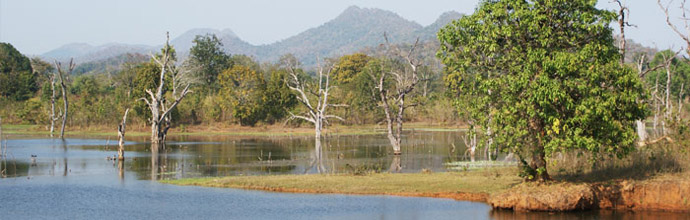
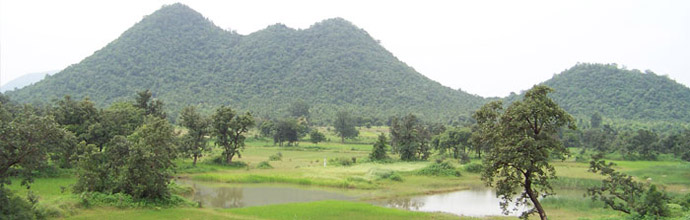
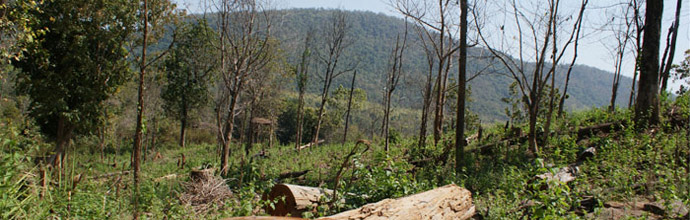
Odisha is home to a wealth of natural resources – it is rich in forest reserves, water, land and minerals.However, the path of natural resource based industrialisation has been controversial.Natural resource deprivation and alienation, through forced diversion and acquisition of land, is emerging as a big socio-economic problem in the state. Vast numbers of people still do not have secure rights and entitlements to resources. Their rights are not always fully recognised, recorded, exercised and protected.
Effective community-based management is crucial
Natural Resources
 Forest
 Water
Land
Water
Land
Odisha is home to a wealth of natural resources – it is rich in forest reserves, water, land and minerals.However, the path of natural resource based industrialisation has been controversial.Natural resource deprivation and alienation, through forced diversion and acquisition of land, is emerging as a big socio-economic problem in the state. Vast numbers of people still do not have secure rights and entitlements to resources. Their rights are not always fully recognised, recorded, exercised and protected.
Effective community-based management is crucial
We recognise that in order to secure rights, protect and conserve precious natural resources and the ways of life of those who rely on them, effective management is crucial. Our work seeks to improve management and governance of natural resources from top government levels to the grassroots community level - but our core approach maintains that, for sustainability, local communities are best placed to manage their own resources.
We also know that community interest in NRM can only be sustainable when the resources generate a meaningful livelihood for the people who depend on them and when they play a central role in the management of these resources.
NRM is a broad programme area that includes Forest, Land and Water. It also touch on other cross themes, including Sustainable Agriculture, Bioresource Governance and Mining & Industrialisation.
We also know that community interest in NRM can only be sustainable when the resources generate a meaningful livelihood for the people who depend on them and when they play a central role in the management of these resources.
NRM is a broad programme area that includes Forest, Land and Water. It also touch on other cross themes, including Sustainable Agriculture, Bioresource Governance and Mining & Industrialisation.
Natural Resources
ForestOdisha’s vast forests are rich in biodiversity and some of the most vulnerable populations in the state, including indigenous tribal groups. We are passionate that people dwelling in forests are respected and protected so that their traditional way of life, and their natural surroundings, can be preserved.
"Forest covers about 31.4% of Odisha and provides a livelihood to about 40% of the state’s population. Over half of all villages in the state reside inside or on the fringe of forests, yet poverty is higher than the state average in forest rich areas."
RCDC’s interventions in this field started against the backdrop of Joint Forest Management (JFM) that the state government came up with in early 1990s. We felt that JFM was going to have a disturbing impact on communities that were protecting and managing their own forests traditionally, by taking away the key management rights from them. We began working with these communities in Balangir district and then moved on to other districts to assist them to systematically adopt sustainable management practices, to undertake advocacy and lobbying for upholding their rights over forests and forest produce.
There are an increasing number of threats to forest reserves across India and to the people living within them.
Forests need to be managed and governed effectively.
Community Forest Management (CFM)
"Forest covers about 31.4% of Odisha and provides a livelihood to about 40% of the state’s population. Over half of all villages in the state reside inside or on the fringe of forests, yet poverty is higher than the state average in forest rich areas."
RCDC’s interventions in this field started against the backdrop of Joint Forest Management (JFM) that the state government came up with in early 1990s. We felt that JFM was going to have a disturbing impact on communities that were protecting and managing their own forests traditionally, by taking away the key management rights from them. We began working with these communities in Balangir district and then moved on to other districts to assist them to systematically adopt sustainable management practices, to undertake advocacy and lobbying for upholding their rights over forests and forest produce.
There are an increasing number of threats to forest reserves across India and to the people living within them.
Odisha is rapidly industrialising and de-forestation is increasing to make way for factories, roads and reservoirs.More than 12,840 hectares of forest area has been officially diverted for non-forest use in just 10 years since the year 2000. There are often legal disputes over forest ownership because many communities have been living within or nearby forests for years but do not have legal documentation to support this. Furthermore, many people living within forests are very poor, have a little or no education, and have limited livelihood options available to them in an increasingly market-driven world.
Various resolutions and policies of the government, such as the Forest Rights Act (FRA) 2006 and the Panchayat Extension to Schedule Areas Act (PESA) 1996,are designed to give autonomy, authority and the right to communities to own and manage forest resources. However, implementation is slow and uneven. Odisha is leading the way on FRA implementation, yet it is still to come out with a Rule to implement PESA; in the absence of that, governance of forest and other local resources continues to be under control of the government.
Various resolutions and policies of the government, such as the Forest Rights Act (FRA) 2006 and the Panchayat Extension to Schedule Areas Act (PESA) 1996,are designed to give autonomy, authority and the right to communities to own and manage forest resources. However, implementation is slow and uneven. Odisha is leading the way on FRA implementation, yet it is still to come out with a Rule to implement PESA; in the absence of that, governance of forest and other local resources continues to be under control of the government.
Forests need to be managed and governed effectively.
We believe that people dwelling within and nearby forests are best placed to manage this natural resource themselves - a belief that is supported by the knowledge, understanding and statistical evidence we have gained through around two decades of work in this field. By maintaining and augmenting the quality of forest resources is crucial for safeguarding and improving the livelihoods of forest-dependent communities, as well as stabilising a rapidly degrading environment.
Community Forest Management (CFM)
RCDC has emerged as one of the pioneers in advocating for CFM, not only at national level,but also at international level. For instance, we played an important role in the establishment of an exclusive unit on community forestry at the International Union of Forest Research Organisation.
In our early days we made an attempt to bring together forest protecting villages and groups at the cluster, block and district levels to share their experiencesand challenges and to further evolve collective interventions for strengthening CFM. We adopted multifaceted approaches which emphasised appropriate land management and agriculture development in order to bring together communities to initiate forest protection and managment.
In recent years we have taken CFM to a different level by encouraging communities to develop productivity and income potential in the forests that they manage through Sustainable Forest Management (SFM) practices, and also to adopt a more holistic and integrated approach in view of biodiversity conservation and climate change readiness. We have also piloted a concept Bio-resource Governance (BRG) that has used CFM as a key intervention tool in its all-embracing arena of natural resource governance.
We work in several ways to improve CFM across Odisha and India
Our grassroots CFM work aims to encourage communities to govern their forest democratically and sustainably, reducing chances of conflict and ensuring their adequate protection.
Our CFM advocacy activities aim to hold government to account, digest local, national and international forest policy and promote community forest causes across the media.
Indeed, today our CFM activities include :
For more please go through the following links
Publication & films, Research & Advocacy, Collaborate, Case Studies
In our early days we made an attempt to bring together forest protecting villages and groups at the cluster, block and district levels to share their experiencesand challenges and to further evolve collective interventions for strengthening CFM. We adopted multifaceted approaches which emphasised appropriate land management and agriculture development in order to bring together communities to initiate forest protection and managment.
In recent years we have taken CFM to a different level by encouraging communities to develop productivity and income potential in the forests that they manage through Sustainable Forest Management (SFM) practices, and also to adopt a more holistic and integrated approach in view of biodiversity conservation and climate change readiness. We have also piloted a concept Bio-resource Governance (BRG) that has used CFM as a key intervention tool in its all-embracing arena of natural resource governance.
We work in several ways to improve CFM across Odisha and India
- We engage with grassroots groups and communities, encouraging and strengthening traditional conservation and protection methods.
- We enable people to assert their legal rights over their forest, using available government schemes and legislation.
- We also campaign at the state, regional and central government levels to ensure proper implementation of laws relating to forest rights, seeking transparency and consistency.
Our CFM advocacy activities aim to hold government to account, digest local, national and international forest policy and promote community forest causes across the media.
Indeed, today our CFM activities include :
- Promoting and piloting community-based and gender-equal forest management practices .
- Facilitating the integration of land-soil-water-agriculture management into forest governance and management .
- Enabling and facilitating forest dwelling communities’ legitimate rights over forest and allied resources by improving their capacities, unity and demonstrated models of success .
- Increasing the income of forest dwelling communities through CFM .
- Conducting high quality research, analysis and dissemination – including media advocacy – to further CFM and the sustainability of forest resources .
- Monitoring, analysing and responding government programmes, schemes and actions .
- Exploring and enable community capacity to earn from their resource management efforts through emerging sources, such as REDD+ .
Publication & films, Research & Advocacy, Collaborate, Case Studies
WaterLand