Climate Justice
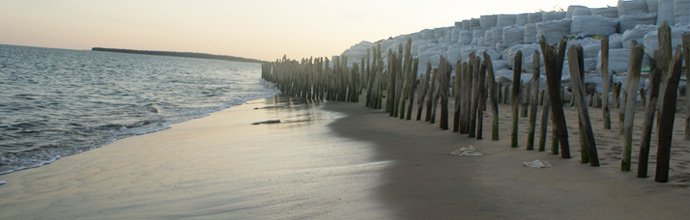
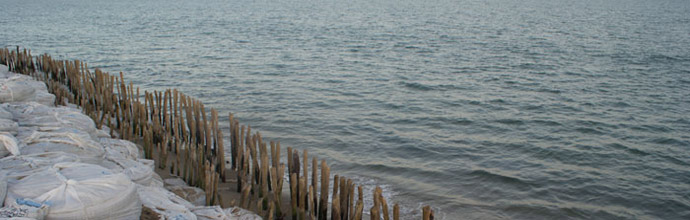
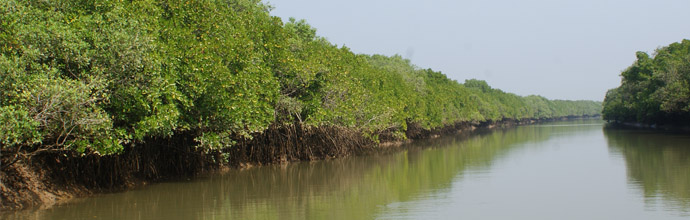
With deviations in temperature, rainfall patterns and natural disasters, experts and researchers are referring to Odisha as a ‘disaster capital’ and ‘climate’s first orphan’.
Poor communities broken traditional coping mechanisms and underdeveloped and inadequate infrastructure is impeding most communities’ resilience to climate change and the mitigation of climate change impacts.
We understand that, as the biggest threat facing humanity, we must now act fast to help vulnerable populations adapt to and prepare for the effects of climate change.2010 saw the beginning of a new era in RCDC's work, as we ventured into the arena of climate change and disaster risk reduction with the objective of building the resilience of coastal communities to face natural disasters efficiently.
Coastal areas are most vulnerable
Community-centred resilience, adaptation and disaster risk reduction
PARIBARTAN
With deviations in temperature, rainfall patterns and natural disasters, experts and researchers are referring to Odisha as a ‘disaster capital’ and ‘climate’s first orphan’.
Poor communities broken traditional coping mechanisms and underdeveloped and inadequate infrastructure is impeding most communities’ resilience to climate change and the mitigation of climate change impacts.
We understand that, as the biggest threat facing humanity, we must now act fast to help vulnerable populations adapt to and prepare for the effects of climate change.2010 saw the beginning of a new era in RCDC's work, as we ventured into the arena of climate change and disaster risk reduction with the objective of building the resilience of coastal communities to face natural disasters efficiently.
Coastal areas are most vulnerable
Odisha has 480 kilometers of coastline stretching over six districts of Balasore, Bhadrak, Kendrapara, Jagatsingpur, Puri and Ganjam. On average, every five years a major cyclone and several cyclones of minor intensity strike the coast - accompanied by high winds, tidal waves and floods almost every year.
Community-centred resilience, adaptation and disaster risk reduction
We work to ensure that vulnerable communities are ready to face the effects of climate change and adapt accordingly, so that the negative impacts are reduced. Using traditional systems of knowledge sharing, we take advantage of existing community structures and leaders to channel information and learning down to every member of the communities we work with.
In order to ensure affected communities maintain a sustainable income, our work on climate change also focuses on livelihood security. In coastal areas especially, small farmers and fishermen are facing the biggest threat to their livelihoods so we aim to help them adapt or find new livelihood options in order to cope with the challenge of climate change.
In order to ensure affected communities maintain a sustainable income, our work on climate change also focuses on livelihood security. In coastal areas especially, small farmers and fishermen are facing the biggest threat to their livelihoods so we aim to help them adapt or find new livelihood options in order to cope with the challenge of climate change.
PARIBARTAN
From March 2011, in partnership with Concern Worldwide and supported by the European Commission, we launched a long-term programme, PARIBARTAN - a climate change initiative that will run for 5 years. It aims to increase resilience, and thereby help reduce the risk of, coastal communities to climate change and natural hazards in the Bay of Bengal. The programme is operational in 8 GPs of Kendrapara and Jagatsingpur.
The key goals of PARIBARTAN :
PRAYAS The key goals of PARIBARTAN :
- Increased capacity of state and non-state actors leading to the integration of appropriate DRR and climate change adaptation activities into relevant multi-sectoral development plans.
- Increased capacity of target communities to withstand, respond to and recover from the impact of hazards through a number of preparedness measures.
- Pilot projects are implemented to demonstrate practical way for climate change adaptation.
- Lessons learnt are promoted and shared amongst practitioners and policy makers at state national, regional and international levels.
Recent Achievements of the Project :
- The organisation of social structures at various level including hamlet, village and panchayat levels. It was ensured that each household has membership and that half of the members are female.
- These structures are being strengthened. To mark the beginning of the initiative, 4 day training programs were organised on the CRVA (Community Risk & Vulnerability Analysis) process at the village level. Here the community members themselves took the initiative to complete the CRVA process at the village level as well as preparing a community contingency plan for the next few years.
- Exposure visits were arranged for the members of the structures created at village level in order to make them aware of climate change issues and acquaint them with various measures people living in similar conditions are taking in other parts of the country, to improve their resilience capacity.
- Awareness generation activities at village level to create understanding on issues of climate change and disaster risk reduction. Street plays were organised in around 40 villages and early warning campaigns were held at panchayat level.
- Distribution of IEC materials including leaflets on water harvesting structures, anti-liquor movement, issues of climate change, sustainable agriculture and more.
- Distribution of early warning kits in selected villages.
The project PRAYAS, also launched in 2011, is being implemented in the district of Puri with the support of UNDP. It is involves: a participatory vulnerability analysis;a plan for climate change adaptation and reducing vulnerabilities of communities to climate change; and disaster risk reduction through integrated water management.
Responding directly to natural disasters
Responding directly to natural disasters
We understand that in the wake of a natural disaster, people need to be helped to get back on their feet, so we enable affected populations to re-establish their sources of income and livelihood support networks.
Our first immediate post-disaster intervention was in Nabarangpur during the August floods of 2010.We helped with the immediate recovery, but focused on the long-term solutions that would enable affected villages to regain control of their livelihoods and build resilience to any future natural disasters.
Our main activities included :
Our first immediate post-disaster intervention was in Nabarangpur during the August floods of 2010.We helped with the immediate recovery, but focused on the long-term solutions that would enable affected villages to regain control of their livelihoods and build resilience to any future natural disasters.
Our main activities included :
- Undertaking a spot survey and assessing the damage.
- Helping form village committees and FAFCs to enable better coordinating and accountability with decision making.
- Forming programme implementation committees and purchase committees.
- Building capacity of local institutions.
- Disseminating information and recording meetings.
- Converging with government programmes.
- Providing shelter support.
- Providing livelihoods support through seed provision and boat-making.
- Training on community-based disaster planning
Influencing policy and debate
By raising the debate and championing the rights of those most affected by climate change at the state and national level, we seek to influence policy and action in their favour. Our work includes :
- Closely monitoring and responding to the Government’s climate change action plan and other climate change related activities.
- Monitoring, studying, analysing and disseminating information on developments in mining, industry, agriculture, infrastructure development, carbon-trading and climate funding – with particular focus on Odisha.
- Creating and contributing to journals about climate change problems, action and policy in Odisha.
- Collaboratingwith organizations like Red Cross, UNDP, UNICEF and other agencies working on climate change mitigation and adaptation in Odisha.