Bhubaneswar & Beyond
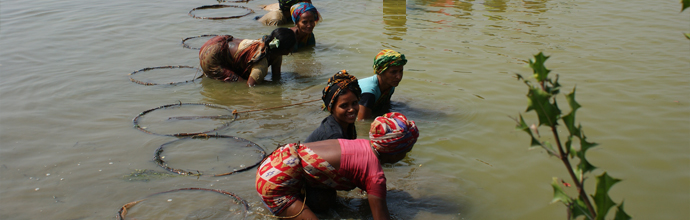
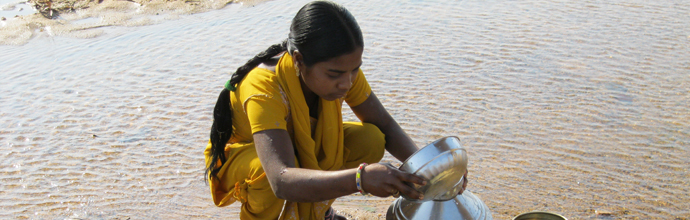
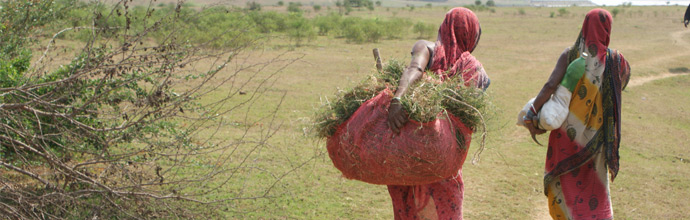
Odisha, formerly spelled ‘Orissa’, is a Central Eastern Indian state which rests on the Bay of Bengal. It has a population of around 42 million, making it the 11th most populous state in India.
Here are some facts about Odisha and its development context :
Where we operate
Field operations
Beyond Odisha
Odisha, formerly spelled ‘Orissa’, is a Central Eastern Indian state which rests on the Bay of Bengal. It has a population of around 42 million, making it the 11th most populous state in India.
Here are some facts about Odisha and its development context :
- Odisha is ranked 32nd on the Human Development Index, out of 35 Indian states and Union Territories.
- With 83.3% of people living in rural areas, Odisha is a rural-based state and it has the highest amount of rural poverty in the whole of India. Odisha’s rural poor spend only Rs.458 per month.
- Urban poverty in Odisha is second highest in India, marginally below Bihar.
- Around 62% of Odisha’s total workforce depends on agriculture and allied sectors (which contributes just 20% to the state’s GDP) for employment and sustenance.
- Odisha’s maternal mortality rate is 367/100000, more than India’s average.
- Odisha is the second most tribal dense state in India, with more than 22% of its population being tribal. Out of 30 districts, 7 have more than a 50% tribal concentration.
- Scheduled Castes constitute 16.5% of Odisha’s total population.
Rich Land, Poor People
Odisha is abundant in natural resources – from coveted minerals, to forest and water - yet its people remain poor. The state’s recent GDP growth has been impressive, but hardly inclusive. The distribution of profits is skewed and the poorest – including tribal groups, the rural poor and farmers - are deprived of their rightful stake in the benefits.
In the case of forests, more than 12,840 hectares of forest area was officially diverted for non-forest use between 2000 and 2010. Yet, around 40% of Odisha’s population is forest-dependent and, with increasing deforestation, their livelihoods and homes are at risk. Indeed, the poverty ratio of forest-rich areas is higher than the state average of 52%.
Some more facts related toOdisha’s natural resources :
Sources :
1. Orissa State Agriculture Policy (2008)
2. Land rights and ownership in Orissa (2008)
3. UNDP India, Directorate of Economics and Statistics (2009-10)
4. Government of Orissa Economic Survey (2010-11)
5. CAG Audit Report (Civil) for the year ended 31 March 2006
6. Government’s reply in the LokSabha is available at http://164.100.24.208/annex/lsq14/9/AS8.htm
7. HDI and GDI Estimates for India and the States/UTs - Results and Analysis (2008)
8. 2011 Census survey (http://censusindia.gov.in/2011-prov- results/paper2/data_files/Orissa/5-fig-orissa-9.pdf ).
In the case of forests, more than 12,840 hectares of forest area was officially diverted for non-forest use between 2000 and 2010. Yet, around 40% of Odisha’s population is forest-dependent and, with increasing deforestation, their livelihoods and homes are at risk. Indeed, the poverty ratio of forest-rich areas is higher than the state average of 52%.
Some more facts related toOdisha’s natural resources :
- Both flood and drought are common phenomena. The state is plagued with a variety of water stress conditions such as its uneven spread of rainfall - 80% of annual rainfall occurs in just 90 days yet there is a shortage in non-monsoon months.
- The state, with 478km of coastline, 0.418 million hectares (MHa) of brackish water lake and 0.671 MHa of fresh water, provides considerable scope for water-based livelihoods, yet water-based livelihoods largely stay unorganised and remain at subsistence level.
- Odisha has about 6.4 million hectares of cultivable land,yet its agriculture sector is underdeveloped and the productivity level is among the lowest in India. Around 2.9 million hectares of cultivable land has been identified as having acute soil erosion and quality problems.
- Odisha is very rich in minerals – it holds an estimated 24.5% of India’s coal, 32.5% of its iron ore, 55% of its bauxite, 95.3% of its chromite and 92.5% of all India’s nickel reserves.
- Coastal areas are regularly hit by cyclones, storm surges, floods and coastal erosion. It has had 100 ‘disasters’ in the past 150 years.
- Odisha’s land distribution is skewed. There were about 445,450 landless individuals and 249,334 homestead-less families in the state, according to 2004-05 records.
1. Orissa State Agriculture Policy (2008)
2. Land rights and ownership in Orissa (2008)
3. UNDP India, Directorate of Economics and Statistics (2009-10)
4. Government of Orissa Economic Survey (2010-11)
5. CAG Audit Report (Civil) for the year ended 31 March 2006
6. Government’s reply in the LokSabha is available at http://164.100.24.208/annex/lsq14/9/AS8.htm
7. HDI and GDI Estimates for India and the States/UTs - Results and Analysis (2008)
8. 2011 Census survey (http://censusindia.gov.in/2011-prov- results/paper2/data_files/Orissa/5-fig-orissa-9.pdf ).
Where we operate
Our head office is located in Bhubaneswar – the capital of Odisha. We have decentralised our field-level management, giving an amount of autonomy to our three Regional Offices in Balangir, Nabarangpur and Koraput, and to our many satellite field offices.
Over time we have carved a niche for ourselves in the development sector. For the themes we work on, particularly forest and natural resource management, RCDC is the most well known organisation in Odisha.
We operate at several levels - with the primary target communities at the grassroots level, up to the top government spheres in order to influence decision-making and to ensure accountability and transparency.
Over time we have carved a niche for ourselves in the development sector. For the themes we work on, particularly forest and natural resource management, RCDC is the most well known organisation in Odisha.
We operate at several levels - with the primary target communities at the grassroots level, up to the top government spheres in order to influence decision-making and to ensure accountability and transparency.
Field operations
Our grassroots activities are now spread over 15 districts and cover around 1000 villages –our offices and operational districts are identified on the map.
Beyond Odisha
We are increasingly providing consultancy, research, policy analysis and advocacy services across India. For example, in 2010, we ran an impact assessment of IASU initiatives undertaken by Oxfam India in Kutch, Gujarat. To find out more about our consultancy work, go to Research & Advocacy.
Our Operational Area